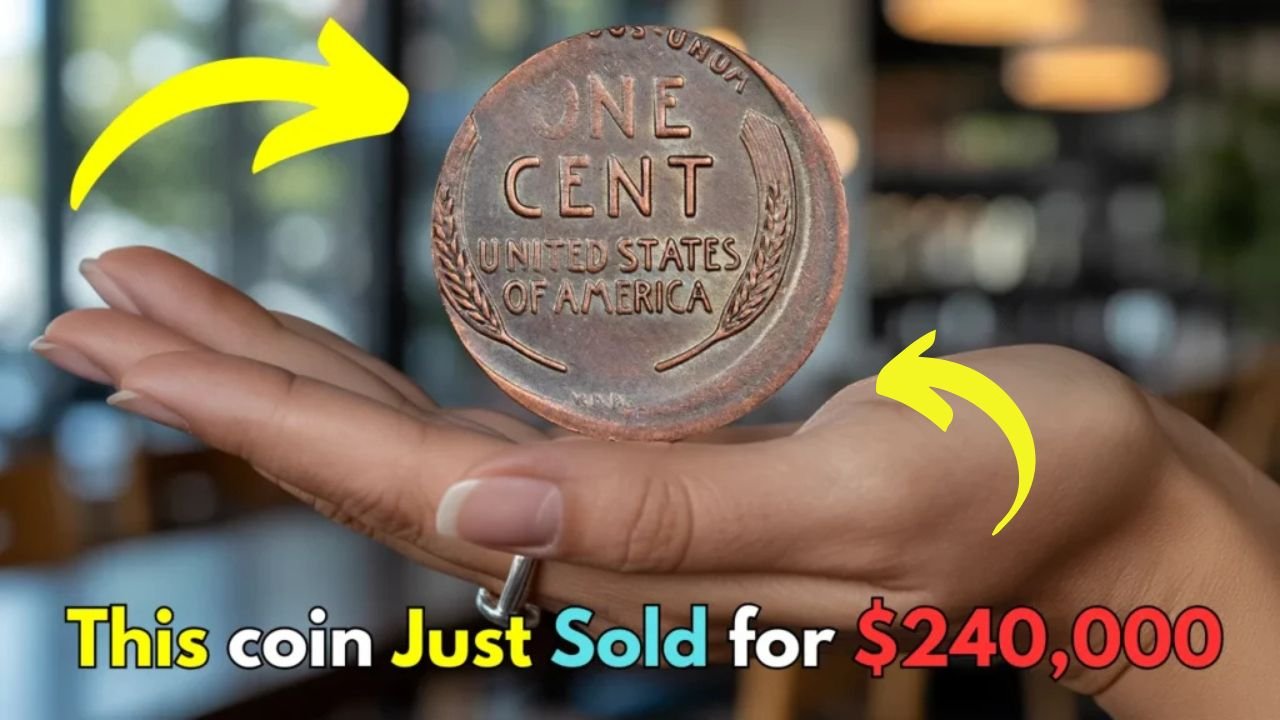
This 1955: Sometimes, the most valuable things are hiding in plain sight. That was exactly the case for one lucky café owner who made a shocking discovery while emptying a tip jar: a 1955 Doubled Die Lincoln Wheat Penny, one of the most famous error coins in American history. That humble one-cent piece just sold at auction for a staggering $240,000.
A Tip Jar Treasure
The discovery happened in a small diner in Pennsylvania. The owner, sorting through coins at the end of a busy shift, noticed one penny looked odd. The text appeared doubled, and the date seemed blurry. Instead of tossing it into the register, they set it aside and later took it to a local coin dealer—just in case.
To everyone’s amazement, it was the real deal: a genuine 1955 Doubled Die Obverse Lincoln cent, confirmed and graded by a professional service. The coin went on to sell at a high-end auction, drawing fierce competition from collectors and ultimately selling for $240,000.
What Is the 1955 Doubled Die Penny?
The 1955 Doubled Die Lincoln cent is one of the most sought-after error coins in U.S. numismatic history. Due to a misalignment during the minting process, the obverse die (used to stamp the front of the coin) was improperly duplicated, resulting in a striking visual error.

You can clearly see the doubling on “LIBERTY,” “IN GOD WE TRUST,” and the date “1955.” It’s bold, dramatic, and immediately recognizable—even to the untrained eye.
Roughly 20,000 to 24,000 of these coins were accidentally released into circulation before the error was caught. While many were spent and worn down over time, well-preserved examples are extremely rare and can be worth six figures.
Why This Coin Was So Valuable
The tip jar penny was graded MS64 Red, meaning it retained much of its original mint luster and was in near-pristine condition despite being over 65 years old. The bright red tone, minimal wear, and sharp strike made it especially attractive to collectors.
Although circulated, the coin’s condition was unusually good—an important factor in its final sale price. With demand for iconic error coins at an all-time high, this penny attracted strong bidding and reached $240,000 at auction.

How to Spot a 1955 Doubled Die Penny
Think you might have one? Here’s what to look for:
- Strong doubling of the letters in “LIBERTY,” “IN GOD WE TRUST,” and the numbers in “1955.”
- No mint mark, as all were minted in Philadelphia.
- The reverse (wheat stalks) will appear normal—only the front is doubled.
- Red or brown tone can affect value; “Red” coins are the most desirable.
Final Thoughts
Finding a rare and valuable coin in a tip jar seems like a once-in-a-lifetime stroke of luck—but it’s also a powerful reminder that treasures can show up in the most ordinary places. The 1955 Doubled Die Penny is one of the most recognizable U.S. mint errors, and it’s still out there waiting to be discovered.
So before you toss your spare change in a jar or cash it in at a machine, take a closer look. That humble penny could be worth a fortune—just like the one that turned a tip jar into a $240,000 windfall.
Disclaimer: Coin values depend on rarity, condition, and current market demand. Always seek professional grading for potential high-value coins.