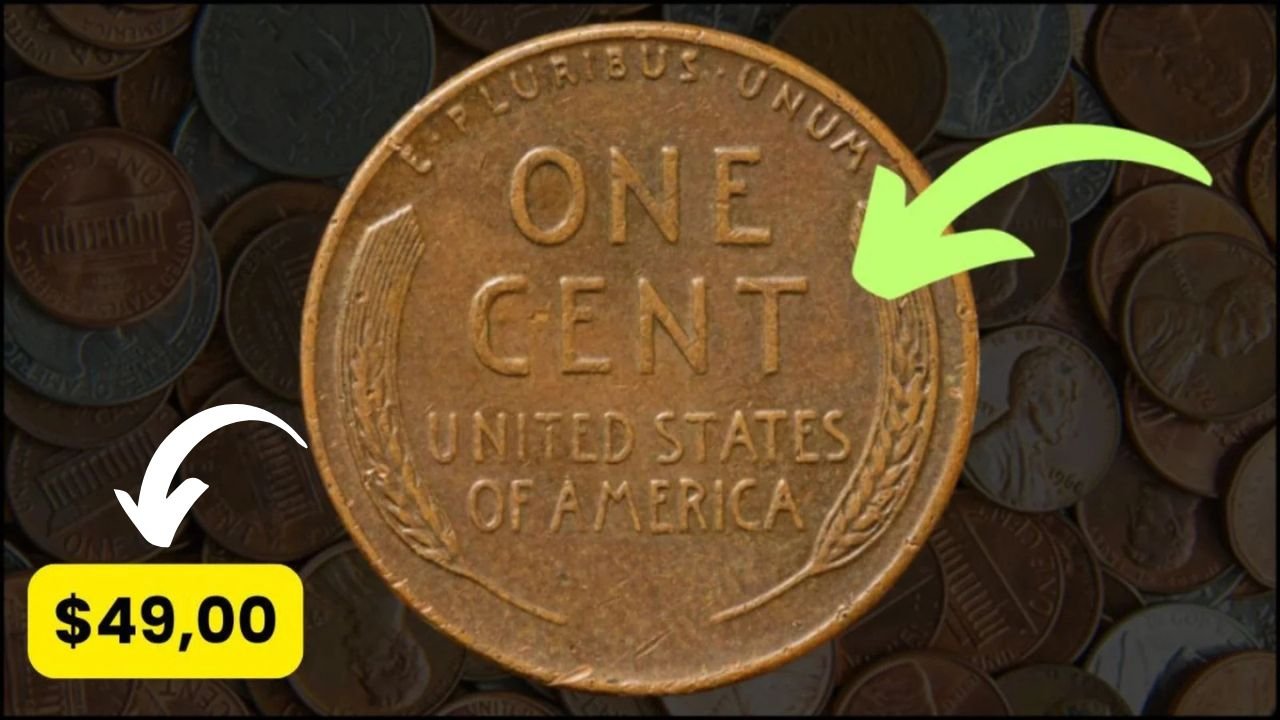
In the world of coin collecting, legends of rare finds still popping up in pocket change continue to captivate collectors and casual observers alike. One such legend centers around the Lincoln Wheat Penny — specifically, rare variants that have sold for astonishing amounts, sometimes as high as $49,000. But is it really possible that such a coin is still in circulation today?
The Lincoln Wheat Penny: A Brief History
First minted in 1909, the Lincoln Wheat Penny — also called the “Wheat Cent” — was the first U.S. coin to feature the likeness of a real person, President Abraham Lincoln. Designed by Victor D. Brenner, the reverse side showcases two wheat ears, which gave the coin its popular name. These pennies were produced until 1958, after which the reverse was changed to the Lincoln Memorial design.
What Makes a Wheat Penny Worth $49,000?
Not all Lincoln Wheat Pennies are valuable — in fact, most are worth just a few cents. But certain rare specimens can fetch thousands at auction due to unique minting errors or extremely low mintage numbers. A few notable examples include:
-
1943 Copper Penny: During World War II, pennies were made from steel coated in zinc to save copper for the war effort. However, a few 1943 pennies were mistakenly struck in copper. These rare errors have sold for up to $250,000, with some more conservatively valued at $49,000 to $85,000 depending on condition.
-
1955 Double Die Penny: This famous error shows a noticeable doubling of the date and inscriptions on the coin. High-grade examples have sold for tens of thousands of dollars.
-
1909-S VDB Penny: Only 484,000 of these were minted in San Francisco with the designer’s initials (V.D.B.) on the reverse. This key date is a cornerstone for serious collectors and can be worth thousands depending on condition.

Are They Still in Circulation?
Technically, yes — but finding one in the wild is extremely rare. Wheat Pennies were last minted in 1958, meaning any remaining in circulation are over 65 years old. Still, millions were produced, and some are occasionally found in rolls of pennies or in old jars, especially in estate sales or coin hoards.
Most coin collectors and banks have filtered out the majority of Wheat Pennies over the decades. However, stories occasionally surface of lucky individuals discovering valuable pennies in circulation — though this usually involves sharp-eyed coin hunters with knowledge of what to look for.

What to Look For in Your Change
If you’re curious whether you might have a treasure in your coin jar, here are a few things to check:
-
Date and Mint Mark: Look for key dates like 1909-S VDB, 1914-D, or 1931-S.
-
Unusual Materials: 1943 pennies that are not magnetic may be made of copper — a potential gold mine.
-
Double Dies: Look closely at the text for doubling, especially on the 1955 penny.
-
Condition: Coins in mint or uncirculated condition fetch significantly more.
Final Thoughts
While the odds of finding a $49,000 Lincoln Wheat Penny in your pocket change are incredibly slim, the possibility isn’t zero — and that’s part of the thrill. For coin enthusiasts and treasure hunters alike, the Lincoln Wheat Penny remains a symbol of numismatic excitement. If nothing else, it might be time to take a second look at that old coffee can full of change.
Who knows? Your next penny might just be worth a fortune.
Disclaimer: Always have potentially valuable coins authenticated and appraised by a reputable expert or grading service such as PCGS or NGC.